
Stewardship Workforce Empowerment
Supporting Visibility and Equity in Stewardship Careers
The Stewardship Workforce Empowerment Working Group, a partnership between CLSN, Parks California and the Ecological Workforce Initiative, has come together to help create a systematic view of workforce development. A critical piece of this is providing tools, like the Stewardship Careers Wheel, that can be used to have specific, forward-looking conversations that attend to community needs for high-quality jobs that bring prosperity and a sense of purpose.

We believe that stewardship is as much about people as it is about place.
The working group's long-term goals are to:
- Generate shared understanding around the breadth and interconnectedness of stewardship professions.
- Use this shared understanding to contextualize policies, funding needs, and practices rooted in equitable workforce development.
- Foster adaptation specific to regions, focal areas, and local community needs to build equitable, responsive workforce development strategies.
- Expand organizational goals so that collaboration can inform broad solutions without diluting specific on-the-ground needs.
- Promote a culture of equity, community-based learning, and worker-centric thinking in project design and implementation.
Where to Begin?
- The Challenge
The need to increase the pace, scale, and quality of landscape-scale stewardship in California is a complex challenge. Sometimes, this need is also at odds with what's possible under current equitable workforce development investments and practices.
Systemic issues compound this problem. Compensation levels are far outpaced by the cost of living. Inadequate mentorship and pre-professional programs, burdensome application processes and requirements, and a lack of internal pathways for advancement also create recruitment and retention barriers. Workforce development is broad and multi-faceted, and the entities addressing these issues each have different focal areas and regional perspectives.
These intersecting challenges create very real consequences across the state, for project proponents and jobseekers alike, and lead to an inability to effectively steward land.
- The Opportunity
It is possible to change the systems that influence equitable workforce development. This includes improving training, better aligning regional priorities, updating statewide policy and investments, and more. This will require a collective understanding of the available jobs, along with clarity on how systems can better connect local workers to local restoration and stewardship projects.
Recent efforts to revamp and support equitable workforce development and related systems change have been creating career pathways to drive sustainable economic growth, innovation, and access to good-paying jobs. California's Jobs First Initiative is a good example of the type of bottom-up investment in career development that could benefit the stewardship sector and drive policy changes rooted in justice and inclusion.
For our part, the CLSN is mapping the state of the current stewardship workforce to help illuminate the broad swath of essential roles that make up this sector. Along with our partners, we are building a shared understanding upon which truly inclusive systems for workforce development can be built.
Equitable Workforce Development Tools
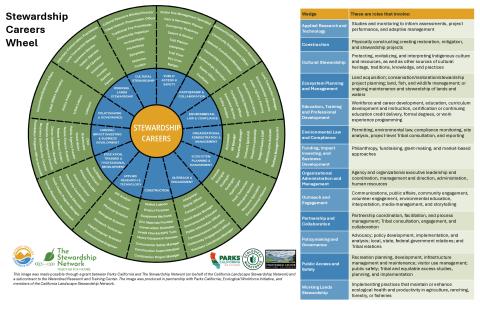
The Stewardship Careers Wheel
With funding from Parks California and strategic support for the Watershed Research & Training Center, we focused on a driving question: who makes up the stewardship workforce?
- Find Out More
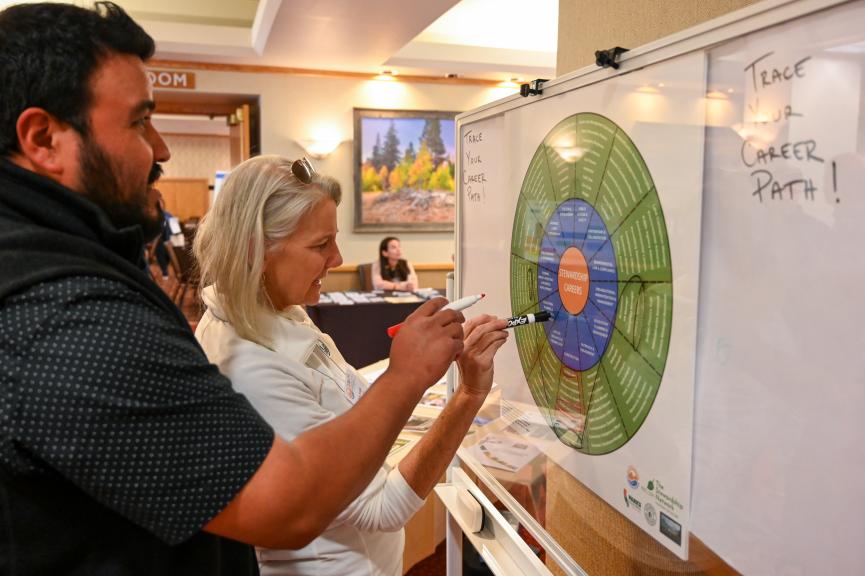
The Stewardship Careers Wheel highlights the vast array of professions needed to undertake effective and lasting socio-ecological stewardship activities. It was developed to encourage conversations that start from a shared understanding of what is meant by "the stewardship workforce." It is also intended to enable broader discussions about what's truly needed to support an inclusive stewardship workforce rooted in equitable outcomes for workers and the landscapes, seascapes, and communities they serve.
However, this tool is only one step in understanding the dynamic interplay of workforce development challenges and opportunities, and is meant to be a launching point for further statewide work.