Workshops
Additional Workshops at CLSN@10
October 22nd, 2026 - Granlibakken Tahoe
Join us on Day 3 of CLSN@10 for a deep dive into a special topic of your choosing! We are offering three workshops to deepen your skills, enhance your involvement in stewardship, and offer another way to connect with folks who share similar interests.
What you need to know:
All workshops run from 9 am to 4 pm with lunch included. Breakfast will also be provided for registrants prior to the start of each workshop.
Registration costs $150 (plus fees).
You must register for the main conference (Oct 20-21) in order to participate in one of these skill-building workshops. Read below for more information, and if you haven’t already registered for CLSN@10, do so today!
Click Here to register for a CLSN@10 workshop
Workshop #1: What Kind of Ancestor Do You Want to Be?
This existential and creative writing workshop will invite each attendee to write their own "missing chapter" in the collection What Kind of Ancestor Do You Want to Be? Collection co-editor, Dr. John Hausdoerffer, will guide participants through experiential exercises exploring the conceptual power of the question, nature writing prompts to connect a big question to the personally transformative power of place, and creative activities leading to the beginnings of a major essay for each person to share with family, friends, and the landscape networks that they serve. Registrants will receive a copy of "What Kind of Ancestor Do You Want to Be?" in the mail prior to the workshop.
Workshop Capacity: 15
Duration: 9am - 4pm (includes lunch)
Room: Aspen Room
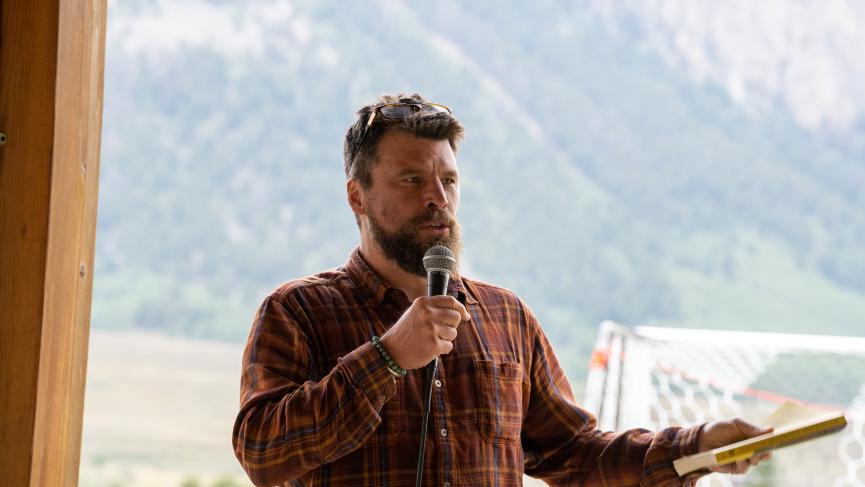
Trainer: John Hausdoerffer
- Trainer Information
Dr. John Hausdoerffer is a teacher, author, and organizational leader from Crested Butte, Colorado. He runs the Philosophy Program at Western Colorado University and serves as Director of Story & Advancement for the Rocky Mountain Biological Laboratory. John's authored and co-edited books include titles such as What Kind of Ancestor Do You Want to Be?, Kinship, An Elemental Life, Wildness, and Catlin's Lament.
Workshop #2: Navigating Conflict: A Workshop for Stewardship Practitioners
Conflict is a challenging and inescapable part of navigating complex conservation and stewardship issues. This one-day workshop will help you understand the causes and drivers of conflict, gain insights into your personal responses to conflict, and improve your understanding of how to navigate conflict when working in teams, multi-stakeholder groups, and with communities.
We'll learn and practice skills through interactive activities and peer learning. Through knowledge gained in a pre-workshop survey, we'll also engage in the specific issues and challenges you are facing in your work.
At the end of the workshop, you'll walk away with a better understanding of the role of conflict in your stewardship work, tools and strategies to navigate conflict more effectively, and new skills you can continue to strengthen after the training. Participants will be required to fill out a pre-workshop survey.
Workshop Capacity: 30
Duration: 9am - 4pm (includes lunch)
Room: Alumni Room
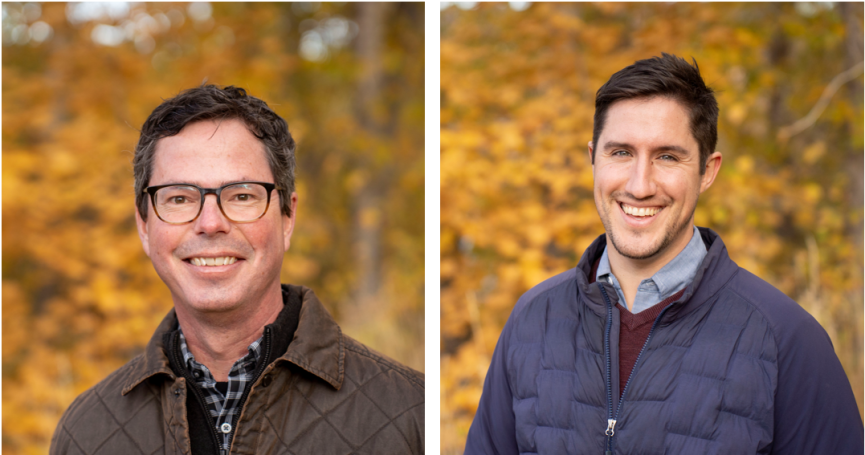
Trainers: Shawn Johnson & Travis Anklam
- Workshop Objectives
- Develop knowledge and skills for effective conflict management
- Understand and identify common sources of conflict
- Explore individual responses to conflict using implementable tools and frameworks
- Introduce and build skills for facilitating constructive dialogue and navigating difficult conversations
- Explore the role and key skills of a facilitator, including active listening and reading group dynamics
- Explore how multi-stakeholder engagement and mutual gains negotiation can facilitate multi-benefit outcomes.
- Learning strategies to manage group conflict and support productive discussions
- Applying conflict resolution, facilitation, and negotiation skills and approaches to the specific context you face
- Training Approach
Throughout the training workshop, instructors will support your learning by inviting you to:
- Build knowledge to support the implementation of conflict resolution and skills and tools in your work and communities
- Engage in an active, participatory, and dynamic learning environment that balances practice, reflection, discussion, and knowledge building
- Engage with your peers and experienced practitioners to learn from one another
- Trainer Information
Shawn Johnson serves as the Director of the Center for Natural Resources & Environmental Policy at the University of Montana. He also serves as Co-Chair of the University's graduate certificate program in Natural Resources Conflict Resolution. Shawn has over 20 years of experience as a facilitator, mediator, instructor, consultant, strategic planner, and thought partner. He works at the local to international level on complex natural resource issues ranging from land use planning and resource management to conservation priority setting and cross-sector collaboration.
Shawn played a key role in establishing the North American Network for Landscape Conservation and serves on leadership committees for several landscape-scale conservation and stewardship networks across the Western US. He is the co-author of Working Across Boundaries: People, Nature, and Regions, and has contributed to numerous articles and reports advancing the field of collaborative conservation and stewardship. Shawn has a Master's degree in Public Affairs and a Certificate in Science, Technology, and Environmental Policy from Princeton's School of Public and International Affairs.
Travis Anklam leads and supports the Center's trainings and learning-centered projects while serving as Co-Chair of the University’s graduate certificate program in Natural Resources Conflict Resolution. He enjoys equipping people with skills and resources to bridge differences, learn together, and address challenges facing the landscapes and communities they call home. This includes work with state and federal agencies, Tribal Nations and communities, community-based groups, and a range of interests shaping natural resource decisions.
Travis has a background in environmental education and facilitation and has worked at learning centers in the Pacific Northwest and Midwest. Prior to joining the Center, Travis received a BA in Environmental Studies and Biology from Luther College as well as an MS in Environmental Studies and a graduate certificate in Natural Resources Conflict Resolution from the University of Montana.
Workshop #3: Collaborative Stewardship Toolkit Workshop
An interactive, skill-based workshop for collaborative stewardship practitioners
The Collaborative Stewardship Toolkit is a practical guide designed to support land- and seascape stewardship collaboratives through every stage of their lifecycle—from formation and early development, through sustaining and adapting partnerships, to transition and renewal. It provides tools, exercises, worksheets, examples, and proven practices to help collaborative groups build trust, establish effective governance, strengthen capacity, improve decision-making, and achieve shared stewardship outcomes.
This hands-on, curated workshop will explore key concepts and tools from the Collaborative Stewardship Toolkit, focusing on the foundational elements of successful collaboration: shared purpose, trust-building, governance, decision-making, collaborative capacity, and long-term sustainability. Participants will engage directly with selected toolkit exercises and worksheets while learning from one another. Participants will be required to fill out a pre-workshop survey.
Workshop Capacity: 30
Duration: 9am - 4pm (includes lunch)
Room: Big Pine Room
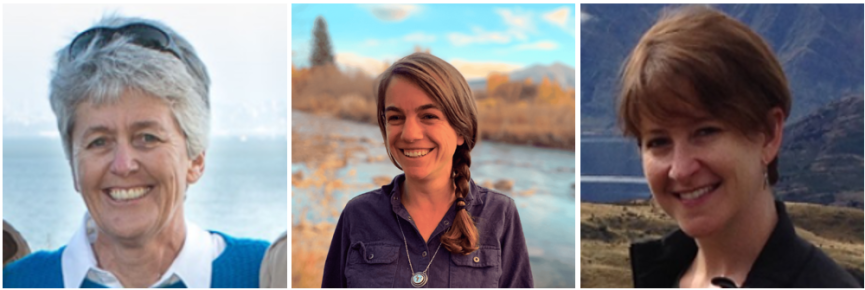
Trainers: Sharon Farrell, Becky Rittenburg, & Michelle O’Herron
- Workshop Purpose
This highly interactive workshop will help participants move beyond understanding the toolkit to applying it. Through facilitated exercises, peer learning, small-group discussions, and real-world case scenarios, participants will build practical skills and identify tools they can immediately use within their own collaborative efforts.
- Participant Input
To ensure the workshop is relevant and responsive to participant priorities, all registrants will receive a brief pre-workshop survey. The survey will gather information about participants' roles, experience with collaboration, current challenges, and areas of greatest interest. Responses will be used to further refine workshop content, exercises, case examples, and discussion topics so the session is tailored to participant needs and learning objectives.
- Who is This Workshop For?
Collaborative stewardship practitioners; individuals providing coordination roles; nonprofit and agency staff, tribal collaborative representatives; funders, backbone organizations, and others engaged in cross-boundary stewardship and conservation partnerships.
- Participants Will Gain
- Understand the collaborative stewardship lifecycle and how to identify where their
partnership or initiative fits. - Learn practical approaches for developing shared purpose, vision, goals, and
collaborative culture. - Build skills in collaborative leadership, trust-building, governance, and decision-making.
- Explore tools for assessing partner capacity, identifying priorities, and strengthening
collaborative infrastructure. - Gain experience using selected toolkit worksheets, exercises, and planning tools.
- Connect with peers and share lessons, challenges, and opportunities across stewardship
initiatives. - Leave with actionable next steps and resources to support their own collaborative work.
- Understand the collaborative stewardship lifecycle and how to identify where their
- Proposed Workshop Activities
- Interactive overview of the toolkit and collaborative lifecycle framework
- Small-group exercises based upon driving questions from participants
- Collaborative capacity and partnership assessment activity
- Governance and decision-making scenario exercise
- Real-time exchanges on stewardship collaboration challenges and opportunities
- Action-planning session to identify toolkit resources for application
- Trainer Information
Sharon Farrell consults as a Strategic Advisor for the national Stewardship Network and other collaborative stewardship partnerships throughout California. Prior to this, she worked for the Golden Gate National Parks Conservancy for 20 years, most recently as the Executive Vice President of Projects, Stewardship & Science. Sharon and her team led the organization's project design and delivery, conservation initiatives, community science, restoration, and stewardship programs. This includes advancing opportunities for engaging partners, scientists and community members in research, monitoring and many aspects of land stewardship. During that time, Sharon helped found the California Landscape Stewardship Network in 2016. Sharon also worked closely with agency partners to oversee the One Tam Partnership, a community initiative to help ensure a healthy future for Mt. Tamalpais.
Becky Rittenburg advises the Climate & Stewardship Program at Parks California, where she coordinates with California State Parks to design initiatives that enhance climate resilience and foster partnerships for landscape-scale stewardship. In her role, she works closely with practitioners and a diverse set of partners to create tools, trainings, and capacity-building projects to advance cross-boundary collaboration.
Michelle O'Herron is Founder of O’Herron & Company, an independent consulting firm located in the San Francisco Bay Area. She has a BS in Biology, an MS in Conservation Biology, and 20+ years of experience working with a variety of government and nonprofit organizations in the areas of strategic planning, program/project management, science communication, and technical and grant writing. She has particularly deep experience in multi-agency environmental collaboratives, having played a key role in the development and implementation of One Tam, Redwoods Rising, the East Bay Stewardship Network, and the Joshua Tree Coalition.